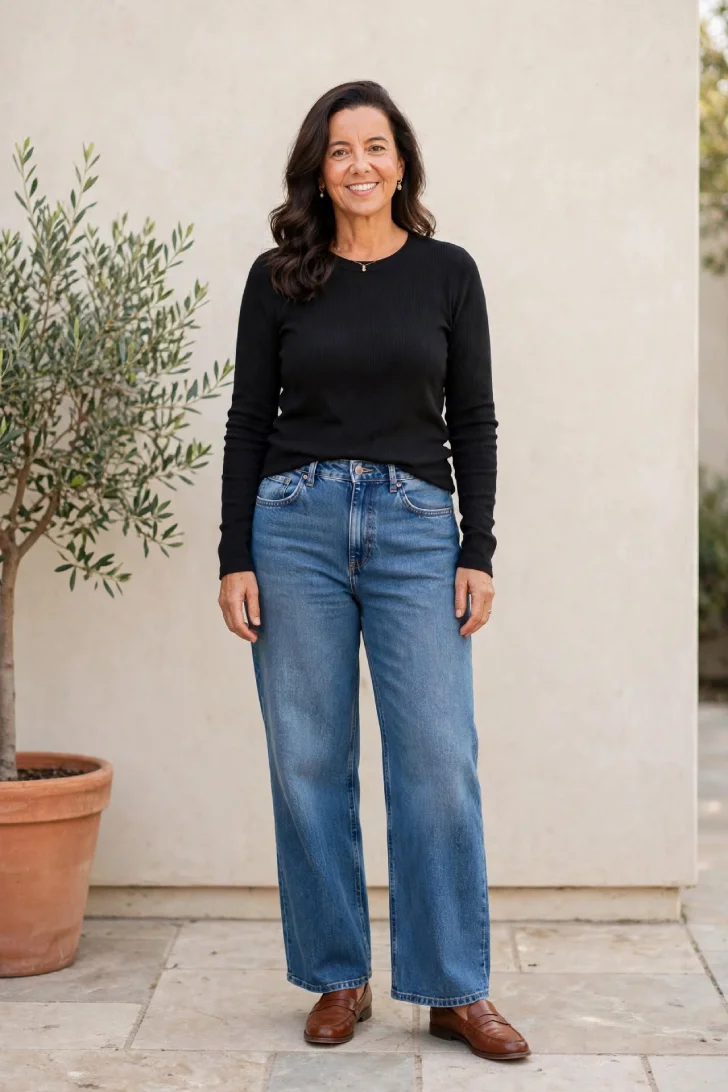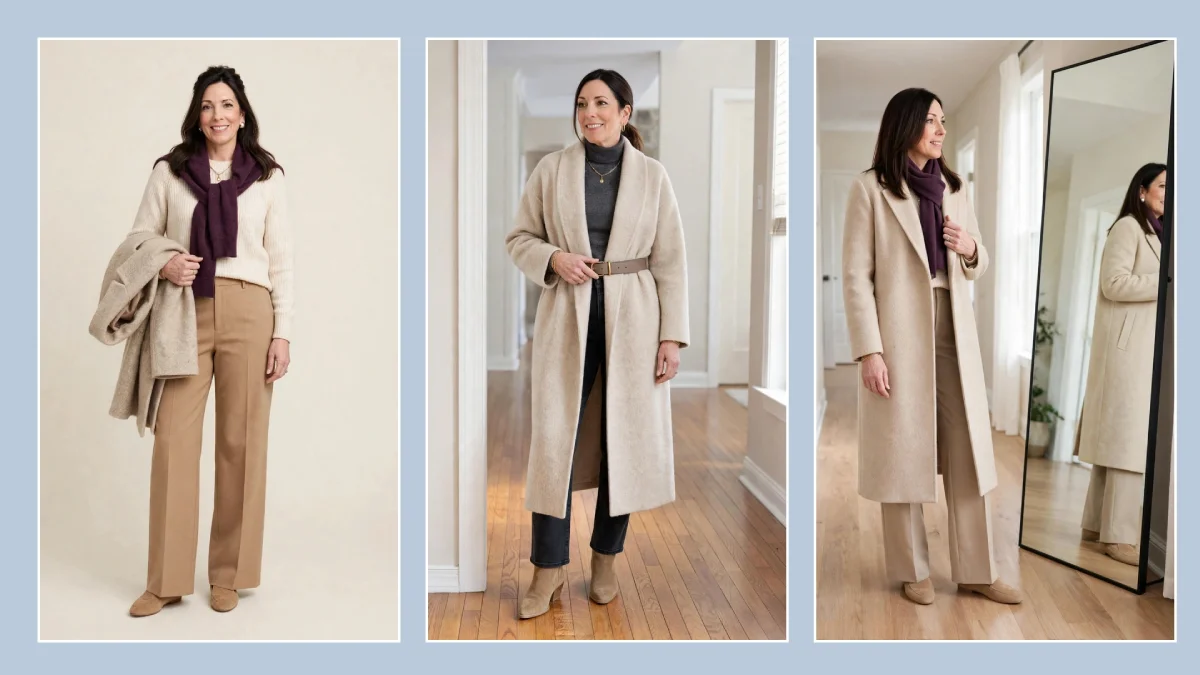

Somewhere around the third layer, a lot of us stop recognizing the person in the mirror. The sweater is bunched under the coat, the sleeves are stacked at the wrist, and the whole outfit looks wider than you feel.
That is the real reason layering gets a bad reputation after 40. It is not that you can’t pull it off. Most advice says to add more, and nobody tells you what to take away.
Jump to an idea (9)
- 1. Start With One Thin Base Layer That Skims, Not Clings
- 2. Follow the Base, Middle, Outer Order So Nothing Fights
- 3. Let One Layer Be Slim and the Other Have Room
- 4. Stagger Your Hems So the Layers Look Planned
- 5. Choose Fabrics That Glide Over Each Other
- 6. Stick to One Color Family and Add a Single Contrast Piece
- 7. Cinch the Waist Over the Bulkiest Layer
- 8. Add Scarf, Hat, and Boots Last, and Stop at One Statement
- 9. Do a Mirror Edit Before You Leave the House
- Final Thoughts
Here is how to layer clothes over 40 so you stay warm and still look like yourself. No new wardrobe and no fussy tricks. Just a handful of rules about thickness, order, length, and fabric that let each piece do its own job.
Below are nine ideas, and each one comes with a quick visual you can screenshot or save for later. If you only have time for one, start with the first. Most layering problems begin at the base, long before the coat goes on.
1. Start With One Thin Base Layer That Skims, Not Clings
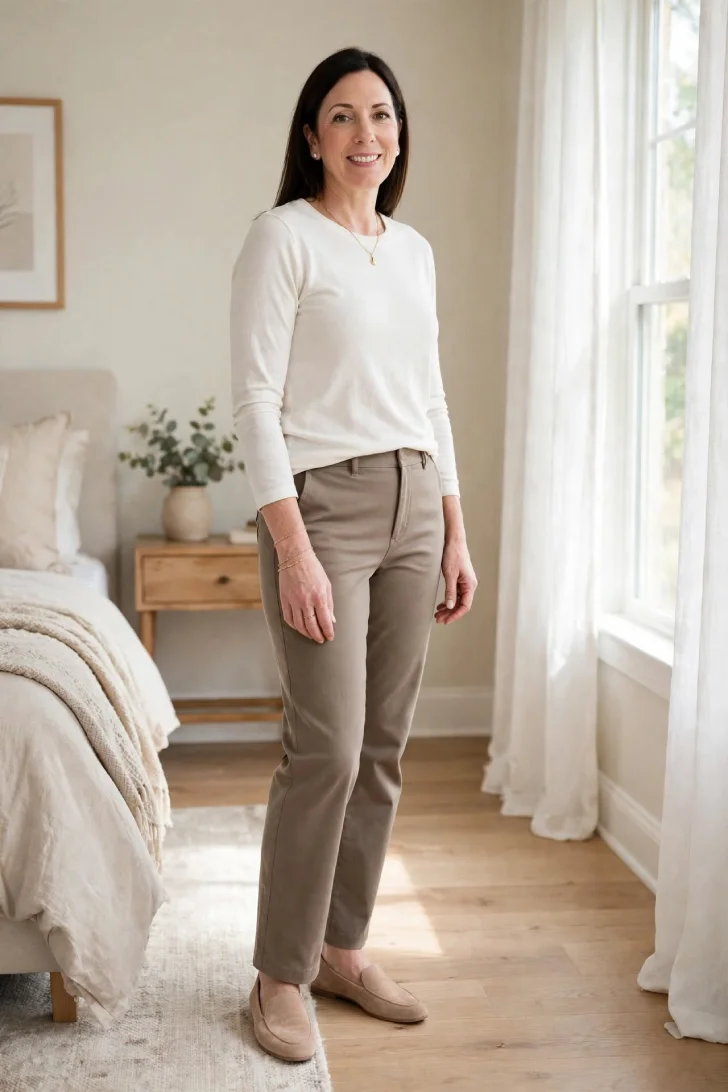
A thick tee under a sweater is where the bulk begins.
Pick a base thin enough to disappear under everything else. A fitted tee, a lightweight long sleeve, or a fine camisole that lies flat against your skin all work.
- ▸Choose a close fit, but not a tight one
- ▸Keep the neckline slightly lower than your top layer so it shows as a clean edge
- ▸Skip anything with thick seams that ridge through knits
Wear the same base for a week and you will learn which one never rides up.
2. Follow the Base, Middle, Outer Order So Nothing Fights
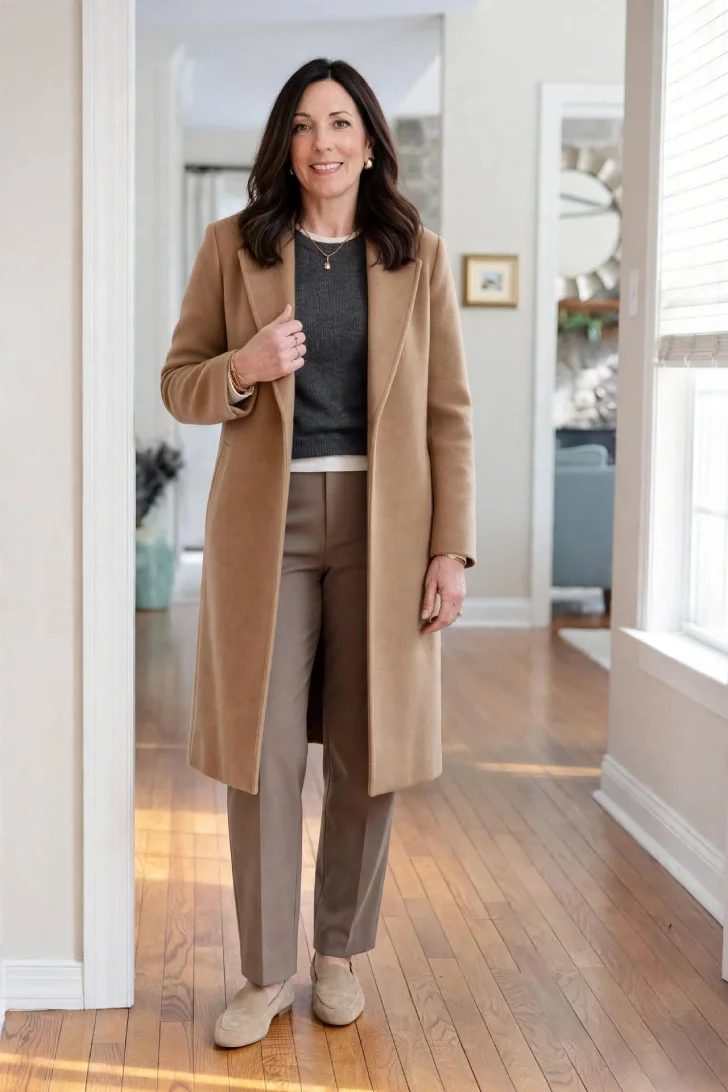
Three layers, three jobs.
The base handles comfort against your skin. The middle adds shape and a little warmth. The outer layer deals with the weather and finishes the look. When two layers try to do the same job, you get that stuffed feeling.
The classic double up is a cardigan over a thick sweater. Swap one of them out and the outfit relaxes right away.
1
Choose your outer layer first, so you know how much room you have underneath.
2
Pick a middle layer with sleeves that won’t push up inside the coat.
3
Finish with the thinnest base you own, then check for bulk at the underarms.
3. Let One Layer Be Slim and the Other Have Room
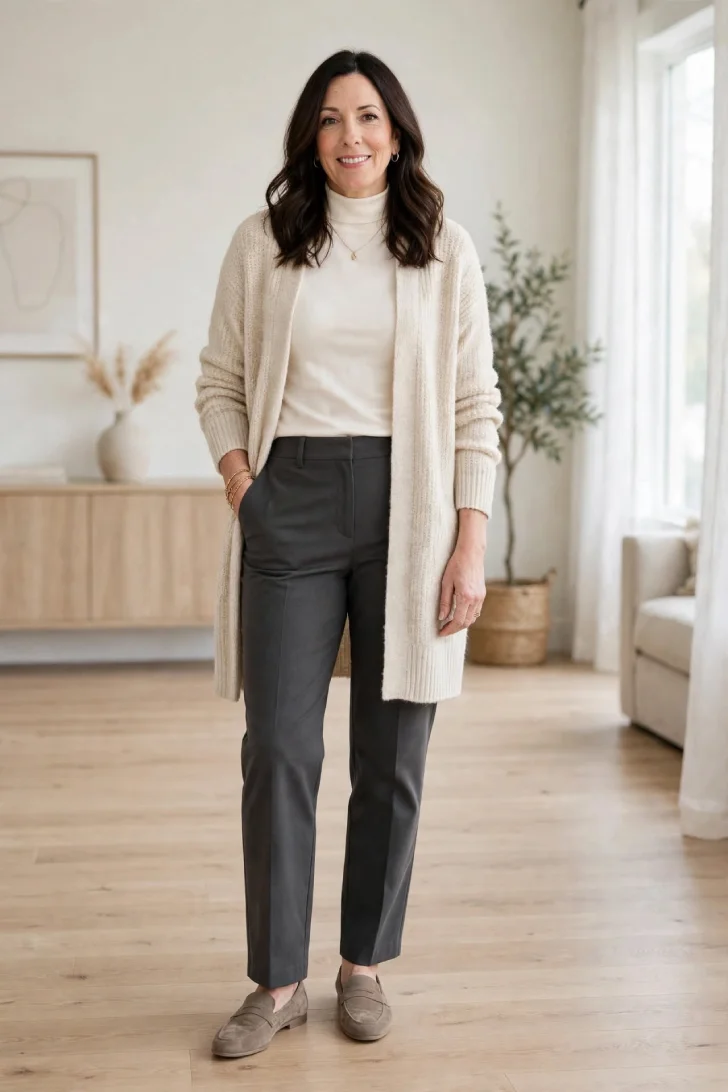
Fitted does not mean tight, and roomy does not mean sloppy.
The trick is balance. When one layer has volume, the layer next to it stays slim. A relaxed cardigan looks sharp over a slim knit. A slim knit disappears under a boxy coat.
Two roomy layers stacked together are what read as frumpy. Two slim layers can feel stiff and cold. One of each is the sweet spot.
Slim knit under an open, longer cardigan.
Roomy sweater over a fitted base and straight pants.
Chunky sweater under a boxy puffer.
Wide cardigan over a loose blouse and wide pants.
4. Stagger Your Hems So the Layers Look Planned
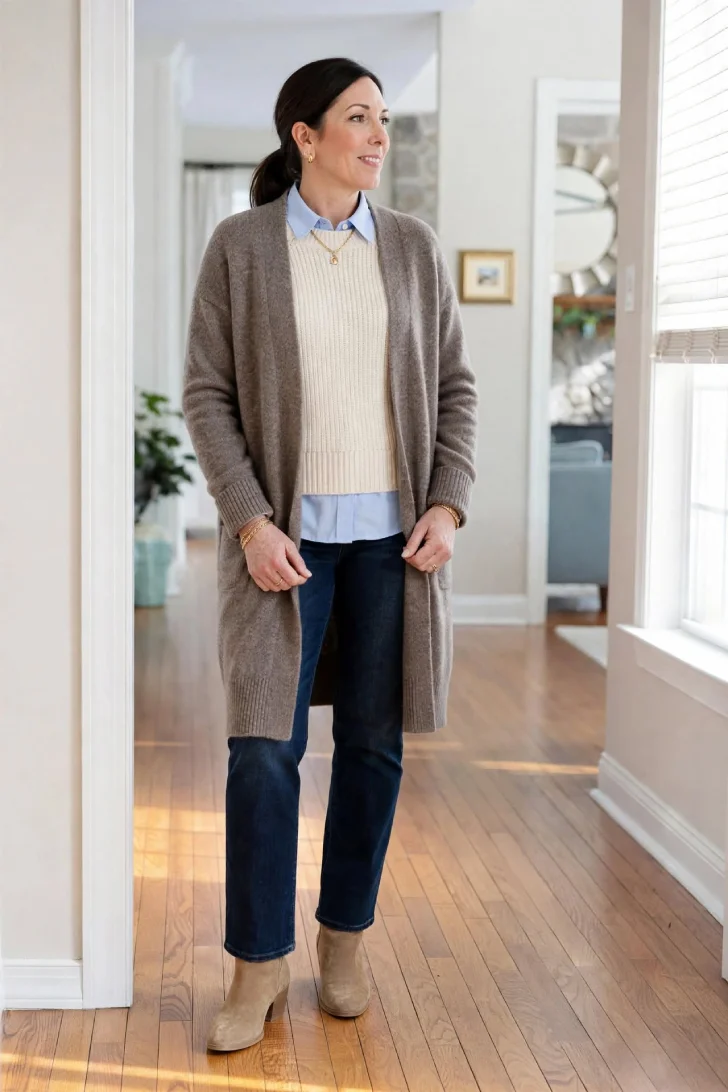
Look at where each piece ends.
When every layer stops at the same spot, you get a stack of horizontal lines across the hips. Let each layer peek out a little lower than the one above it. A couple of inches is plenty.
Two easy ways to do it:
- ▸Pull a shirt tail out under a shorter sweater
- ▸Choose a cardigan or coat that runs longer than what is under it
Uneven on purpose reads as styled. Uneven by accident reads as an untucked mess, so keep the difference clear.
| Hem combo | What it does |
|---|---|
| Shirt tail under a shorter sweater | Softens the hip line |
| Sweater under a longer cardigan | Adds one long, clean line |
| Front tuck, back loose | Shows the waist without bulk |
5. Choose Fabrics That Glide Over Each Other
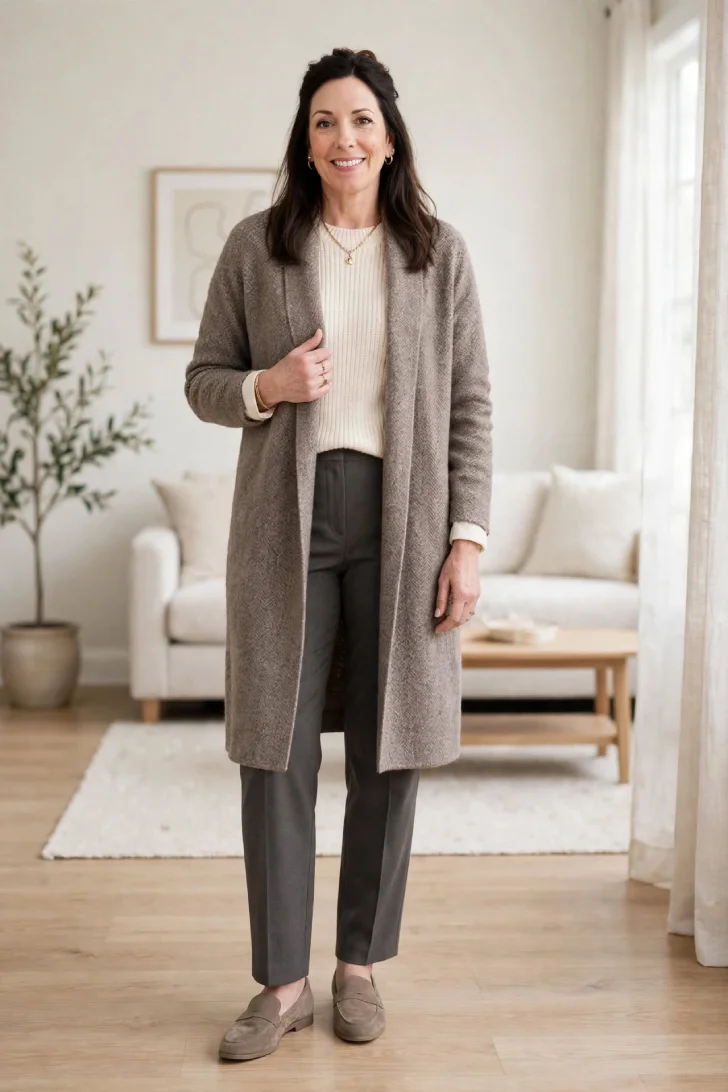
Wool on wool grabs. Fuzzy on fuzzy twists.
If you have ever had a sweater ride up inside a coat, the fabrics were arguing. Put something smooth next to your skin, something with a bit of texture in the middle, and a structured fabric on the outside.
That static cling at the end of the day is also a clue. Two layers that stick together will bunch every time you move.
6. Stick to One Color Family and Add a Single Contrast Piece
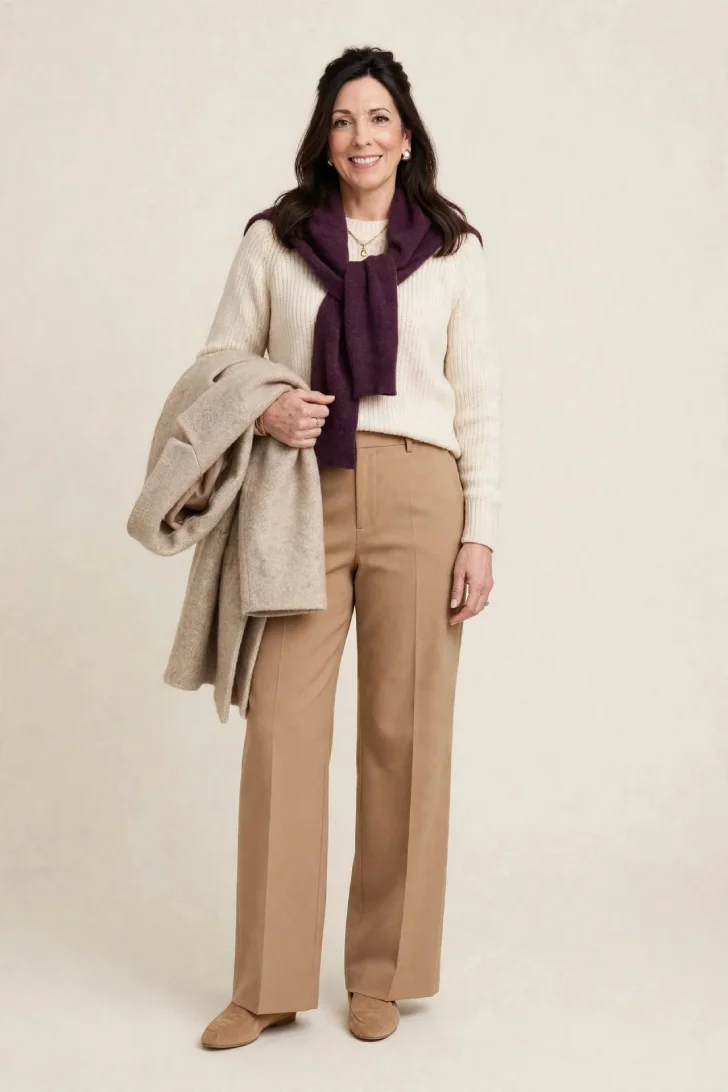
Pick a family, then break it once.
Layers in the same color family read as one smooth outfit. Every extra color adds another line for the eye to follow, and that is what makes a stack feel busy.
Three easy families to start with:
- ▸Camel, cream, and oatmeal
- ▸Charcoal, grey, and black
- ▸Navy, white, and denim blue
Then add one piece that stands apart, like a plum scarf over oatmeal knits or a charcoal coat over cream layers.
💡 Quick Tip
Put your contrast piece near your face or down at your boots. Those are the two spots the eye lands first, so one pop of difference there is enough.
7. Cinch the Waist Over the Bulkiest Layer
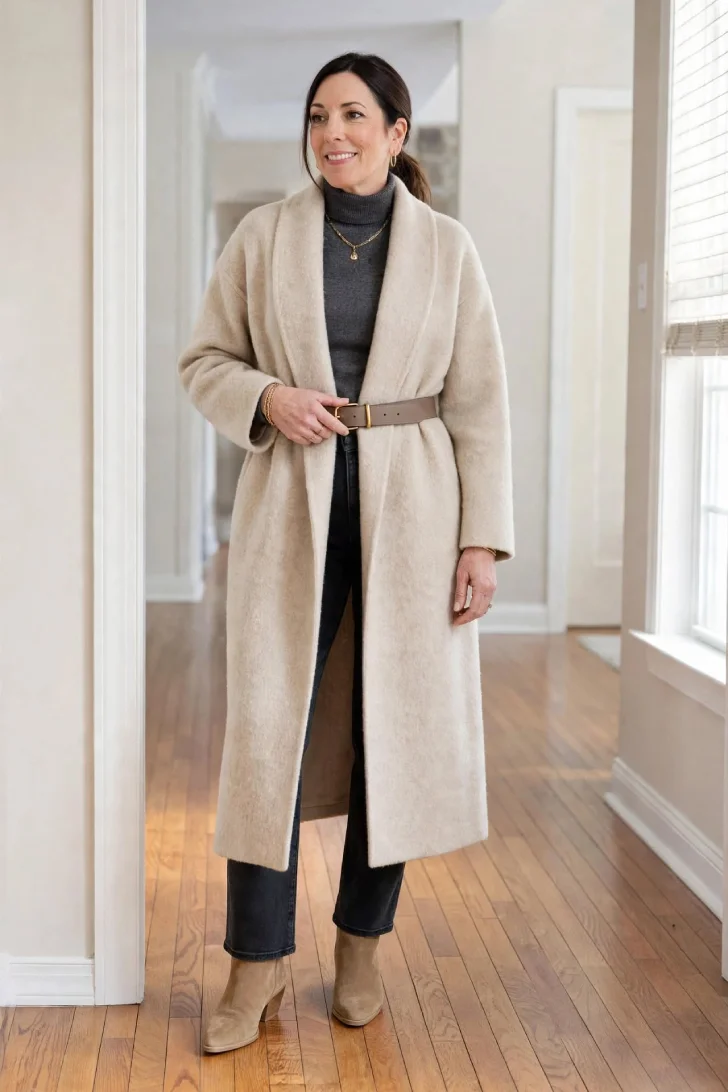
Layers have a way of turning the whole body into a rectangle.
A belt fixes that faster than anything else in your closet. Wear it over the bulkiest layer, not under it, so the shape shows from the outside.
It works over a long cardigan, a wrap coat, or an oversized sweater. Choose a thin or medium belt and keep it a little loose. A belt pulled tight over thick knit looks like a tied up bundle.
A long open cardigan hangs straight down. Sleeves, torso, and hips all read as one wide block.
A belt sits at the natural waist over the cardigan. The shape comes back and the layers look chosen.
8. Add Scarf, Hat, and Boots Last, and Stop at One Statement
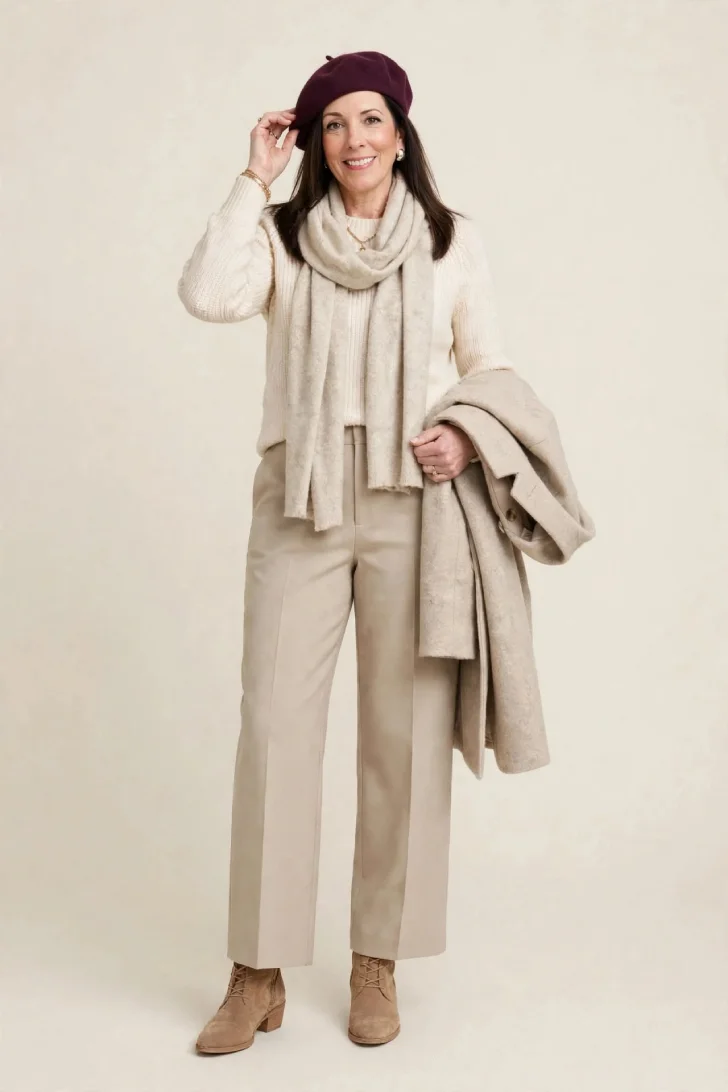
Piling on accessories is the other way layering goes wrong.
Scarves, hats, and gloves count as layers too. Decide which one gets the attention and keep the rest quiet. A patterned scarf with a plain hat looks calm. A patterned scarf, a patterned hat, and printed gloves look like a lot of noise.
Add these pieces after the clothes are settled, because they should finish the outfit, not rescue it.
Check before you walk out
9. Do a Mirror Edit Before You Leave the House
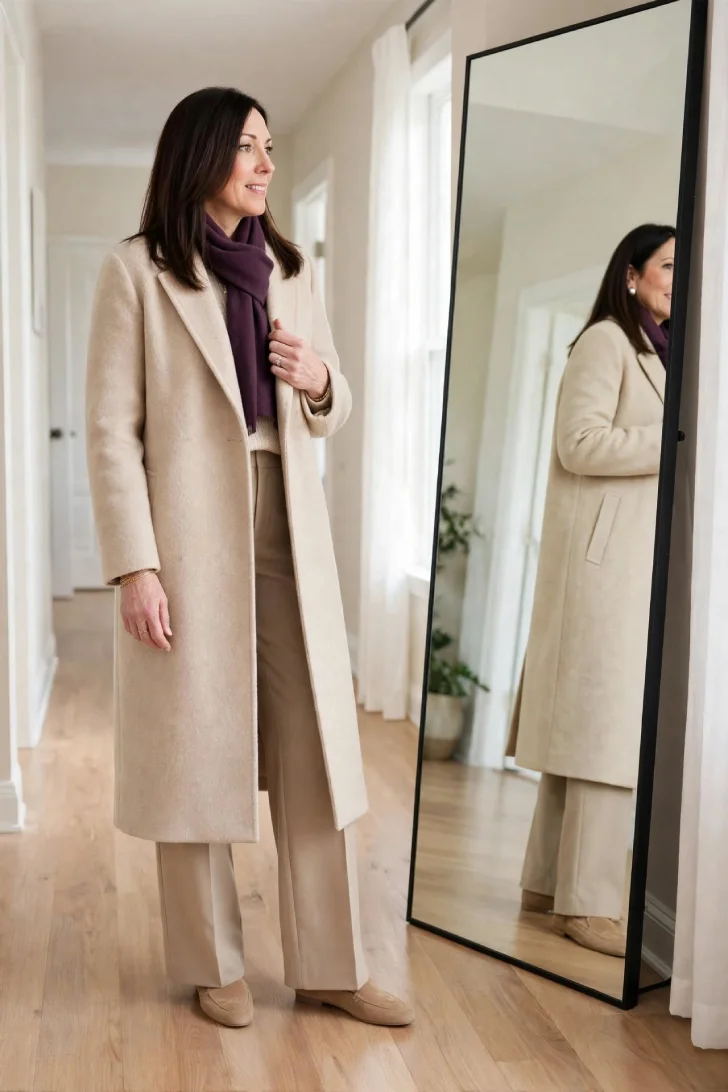
Take one last look, then take one thing off.
Most outfits improve when a single piece comes off, and it is usually the one you added last. Stand a few feet back from the mirror and check three spots:
- ▸Sleeves for bunching at the wrist
- ▸Underarms and shoulders for stacked seams
- ▸Hems for lines that stop at the same height
If something pulls or pinches, that layer is doing too much. Swap it or lose it.
If an outfit feels heavy, take off the layer you added last, then look again.
Final Thoughts
Layering well after 40 is mostly about editing. Keep the base thin, give each layer one job, balance slim with roomy, and let your hems and fabrics do some quiet work. Those small choices are what keep an outfit from feeling heavy.
Once you know how to layer clothes over 40, a cold morning stops being a problem to solve. It becomes a chance to wear your favorite pieces together. Pick one idea from this list and try it this week.
Save this list for the next time the temperature drops and your closet suddenly feels like too much.