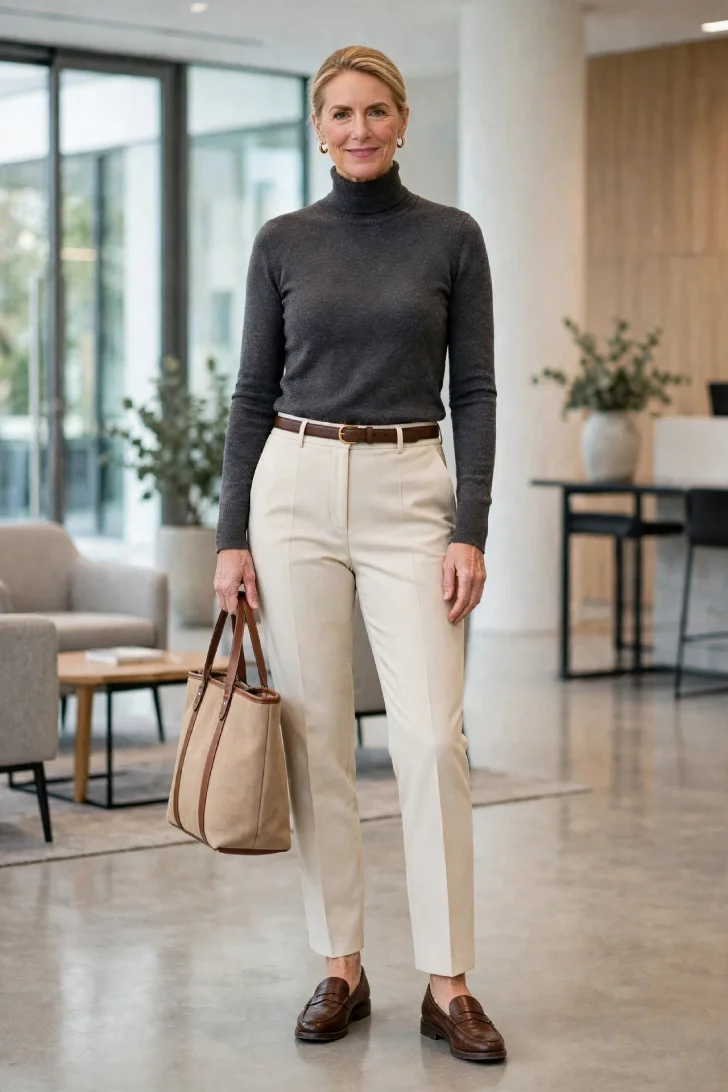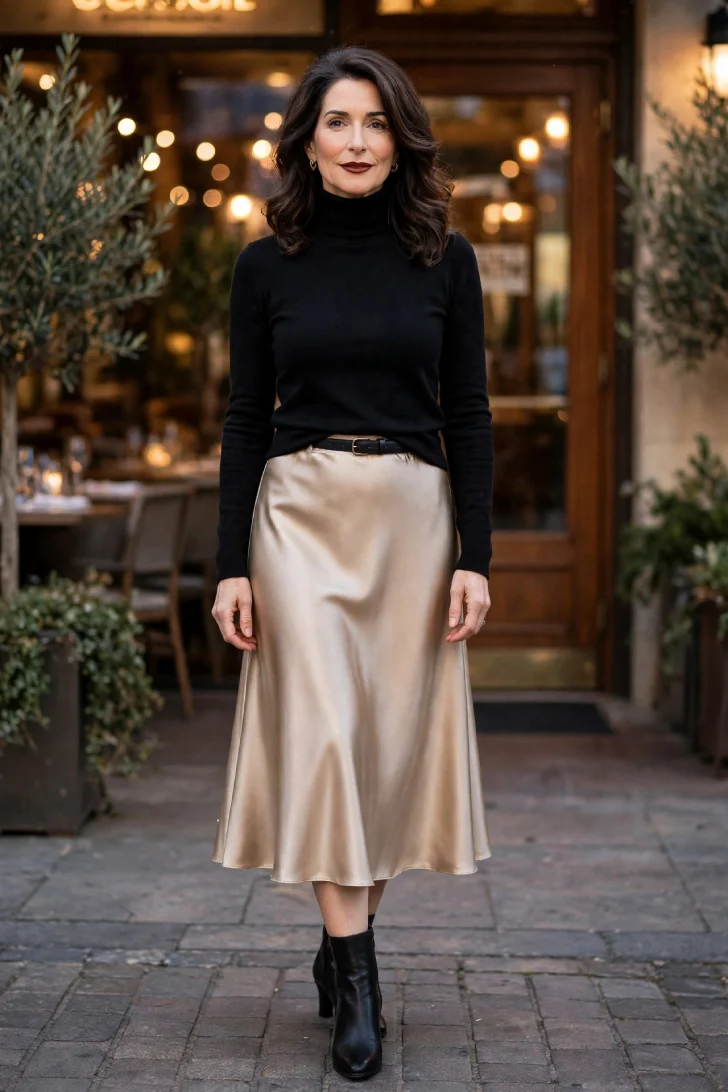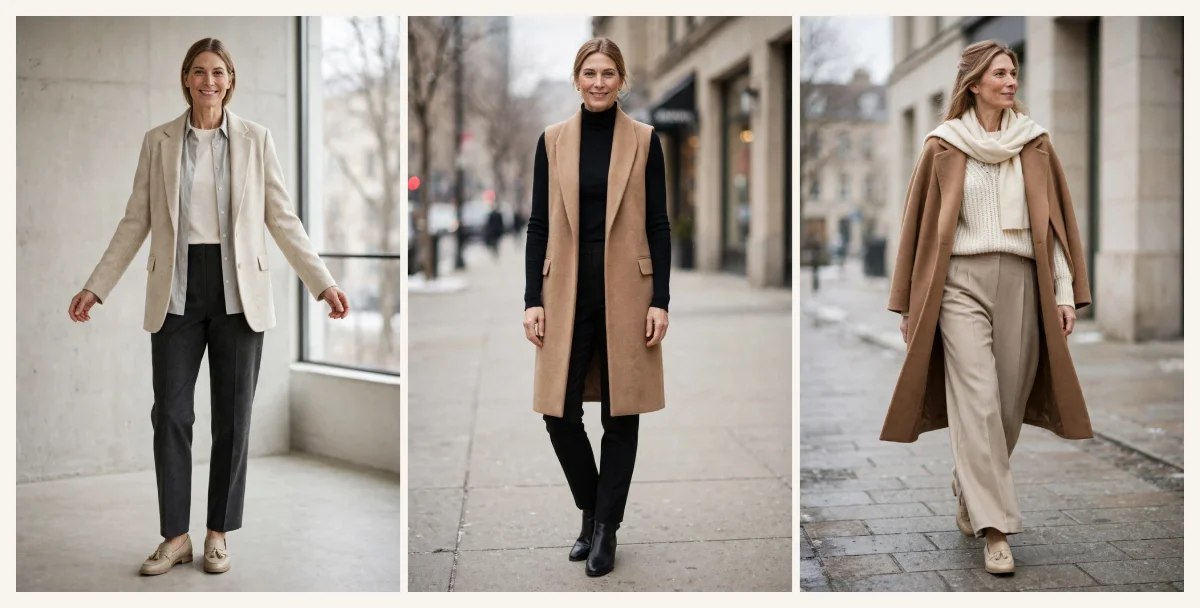

Most winter layering advice boils down to one word: more. Another sweater, a thicker scarf, a bigger coat. By the time you walk out the door, you are warm, but you look like a stack of laundry.
Jump to an idea (9)
- 1. Start With a Fitted Base Layer That Skims, Not Clings
- 2. Keep Every Layer Thin, Because Three Light Pieces Beat One Chunky Knit
- 3. Let One Middle Layer Carry All the Texture
- 4. Tuck Smart: Where to Define Your Waist Under Layers
- 5. Stagger Your Hems So Each Layer Shows on Purpose
- 6. Add a Longline Vest for Warmth Without Widening Your Shoulders
- 7. Stay in One Color Family and Change Only the Shade
- 8. Choose a Coat That Fits Over Your Layers, Not Instead of Them
- 9. Finish With a Scarf, Belt, or Boots That Break Up the Stack
- Conclusion
Layering over 40 is less about adding and more about choosing. The wrong pieces add bulk at the shoulders, hips, and neck, and that is what reads as frumpy. The right ones keep you warm and keep your shape.
Winter layering outfits over 40 work best when every piece has one job. Thin where it sits close to your body, structured where you want shape, and cut to a different length so nothing blurs together.
Below are nine moves I would use on any cold morning. They work with clothes you probably own already, and a few take under a minute to fix. Start at the base layer, because that is where most outfits go wrong.
1. Start With a Fitted Base Layer That Skims, Not Clings
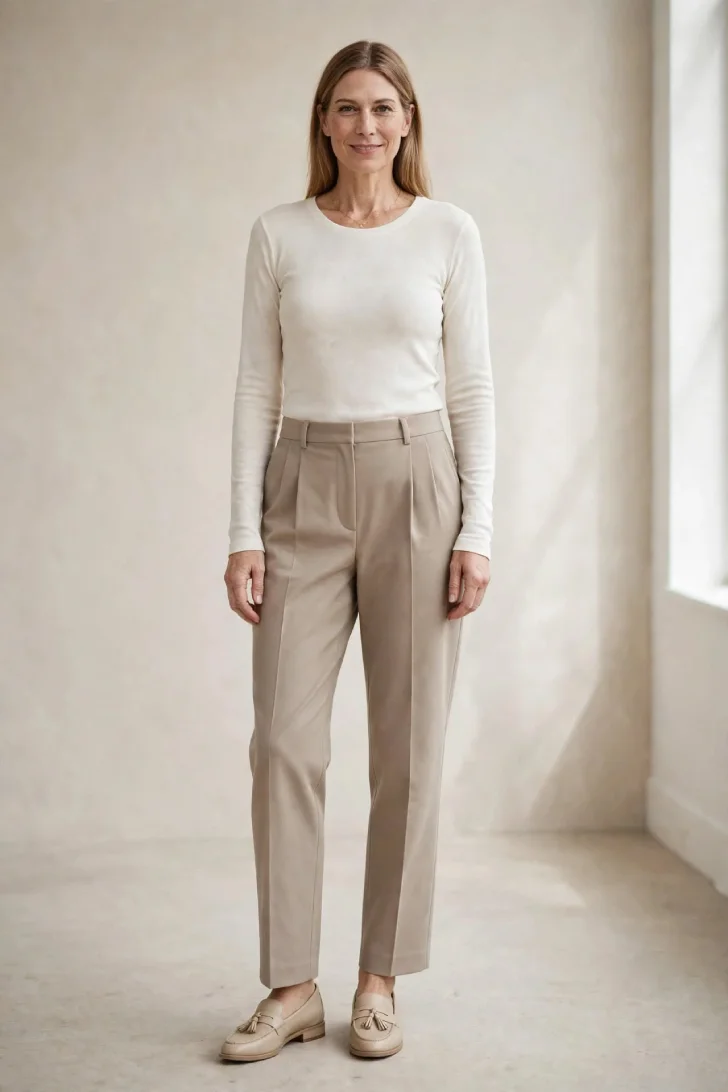
Most bulk starts at the bottom of the stack. A loose tee bunches under your sweater and leaves lumps at the waist and underarms.
Look for these three things in a base layer:
- ▸A thin fabric like merino, modal, or a smooth cotton blend
- ▸A close fit that skims without squeezing
- ▸A neckline lower than whatever goes on top
Skip the old thermal that rolls up every time you reach for the top shelf. A good base layer stays put.
2. Keep Every Layer Thin, Because Three Light Pieces Beat One Chunky Knit
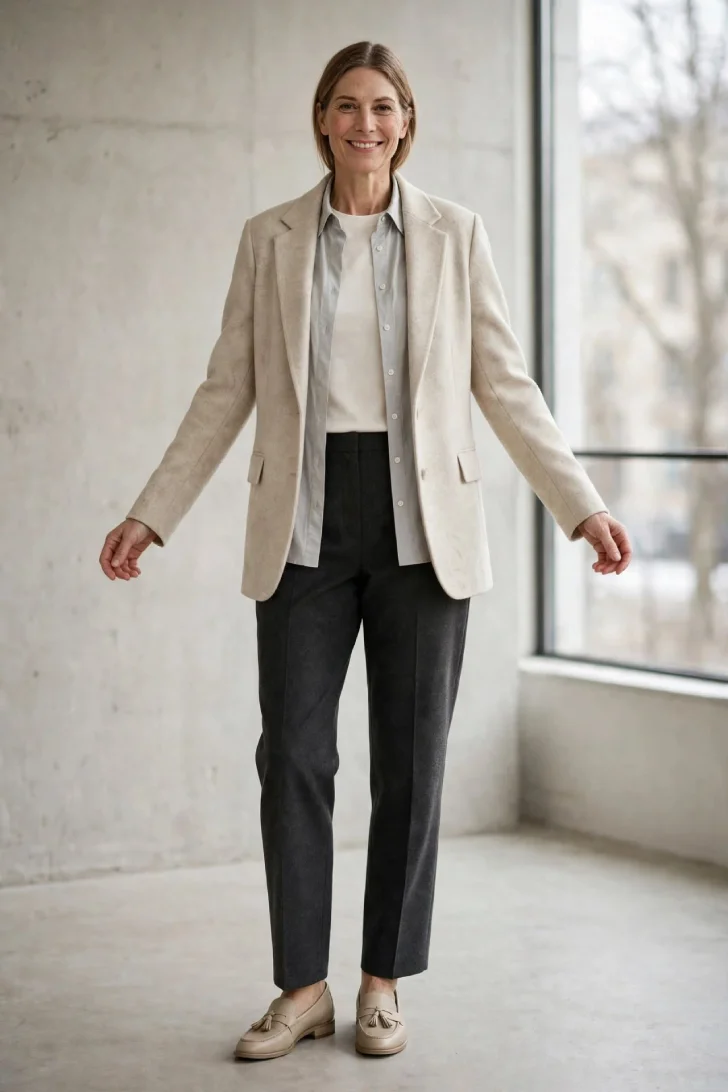
Warmth lives in the small pockets of air between layers, not in one heavy sweater. Several thin pieces hold heat well and sit much flatter on your body.
A simple combo: a fitted tee, a fine knit or button up shirt, and a light cardigan or blazer on top. Each one adds a little warmth without adding much width.
Chunky knits still have a place. Wear one on its own with a thin tee underneath, not squeezed under a coat.
1
Start with the base: fitted, thin, and closest to your skin.
2
Add a fine knit or shirt that looks good enough to wear on its own.
3
Finish with a cardigan or blazer, then lift your arms. If they move freely, you are done.
3. Let One Middle Layer Carry All the Texture

Cable knit, boucle, ribbed wool. Each one looks good alone, and each one adds bulk when stacked on another.
Pick one textured piece per outfit and keep everything around it smooth. A cable knit over a silk blouse and under a sleek wool coat looks planned. A cable knit over a ribbed turtleneck under a boucle jacket looks heavy.
Easy test: if you can feel two textures through your sleeve, simplify.
4. Tuck Smart: Where to Define Your Waist Under Layers

The most common waistline mistake is tucking everything or nothing.
A full tuck under a thick knit creates a ridge at the waistband. Leaving every layer out can hide your shape completely. The middle path is to tuck only the thinnest piece and let the heavier layer drape over it.
Choose based on the length of your top layer, and the table below will sort it out.
| Tuck the thin layer | Leave it all out |
|---|---|
| Defines your waist under a blazer or cardigan. | Works when the sweater hits mid hip or longer. |
| Keep only the thinnest piece tucked. | Keep the hems at different lengths. |
| Skip it with thick knits, which leave a ridge. | Skip it if every layer is wide and boxy. |
5. Stagger Your Hems So Each Layer Shows on Purpose
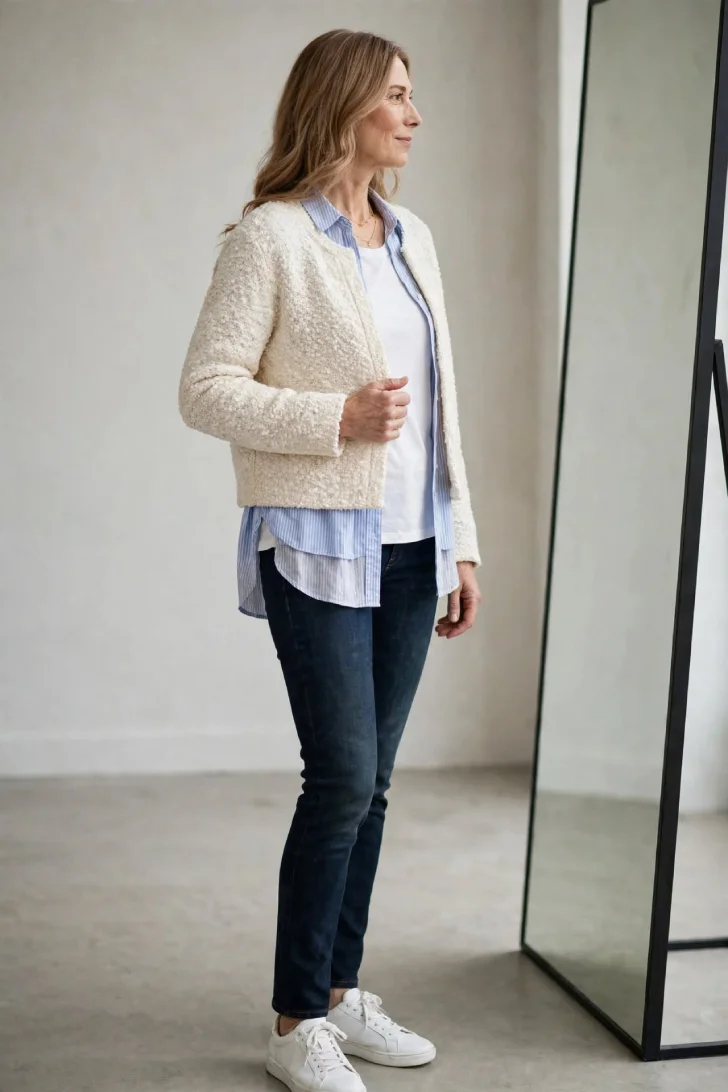
You pull on a tee, a shirt, and a sweater, and all three hems land at the same spot across your hips. That one flat line is what makes an outfit look boxy.
Fix it by letting each layer end at a different point, about two inches apart:
- ▸Let the shirt tail peek out below the knit
- ▸Let the cardigan or jacket stop higher or fall clearly longer
Step back from the mirror. If you see one thick band, shift one hem.
Tee, shirt, and sweater all end at the same point, creating one thick band across the hips.
The shirt tail peeks out below the sweater, and the cardigan stops higher. Three clear lines show, and the outfit reads lighter.
6. Add a Longline Vest for Warmth Without Widening Your Shoulders

A vest keeps your core warm and leaves your arms free, so nothing bunches at the shoulders or under the coat.
Three styles that layer well:
- ▸A tailored wool vest over a fitted shirt
- ▸A slim quilted vest in a thin fill
- ▸A long knit vest that falls past the hip
Longer lengths stretch your torso and pull the eye down instead of out. Wear one over a long sleeve tee and under a coat, and you have warmth with almost no extra width.
⚠️ Watch Out
A puffy vest over a thick sweater adds width right at your chest. Choose a slim cut, and keep the layer under it thin.
7. Stay in One Color Family and Change Only the Shade
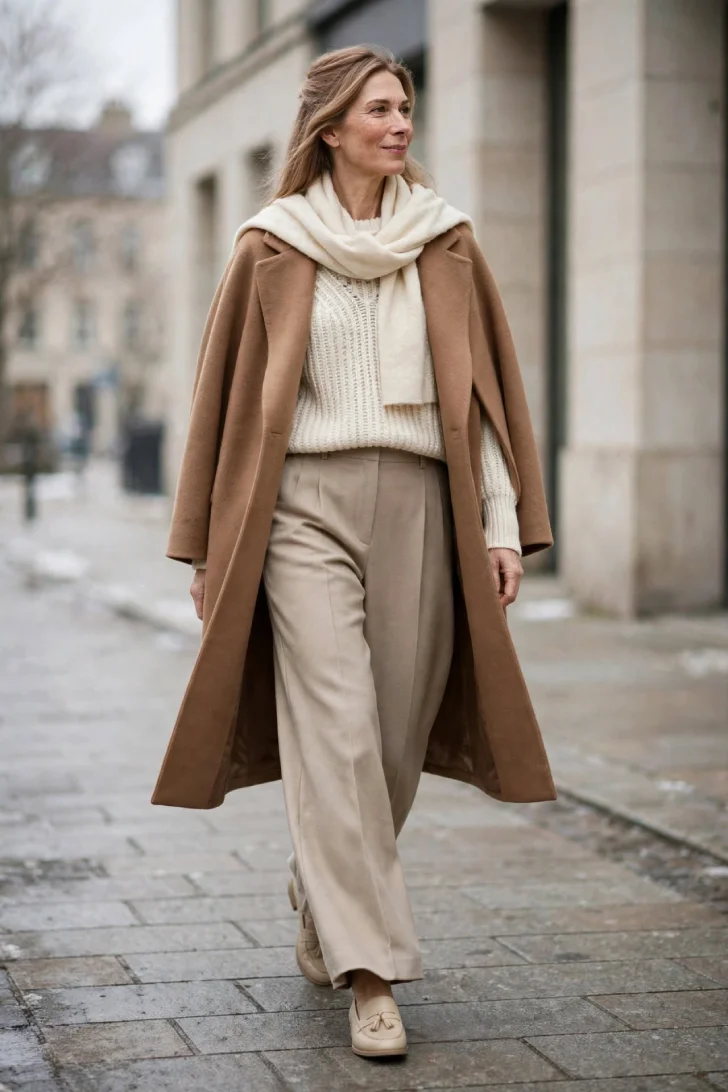
Here is a simple rule. Pick one color family, then shift the shade from layer to layer.
A tonal outfit draws one long line from collar to boots, which makes the layers look planned instead of piled on. It also means you never have to worry about which colors clash.
Three families that work in winter:
- ▸Cream, oat, and camel
- ▸Charcoal, slate, and black
- ▸Navy, ink, and soft grey
Put the lightest shade closest to your face.
Vary the shade and texture inside one family.
Add one lighter layer near your face.
Three unrelated colors in one outfit.
Every layer in the exact same shade, which looks flat.
8. Choose a Coat That Fits Over Your Layers, Not Instead of Them
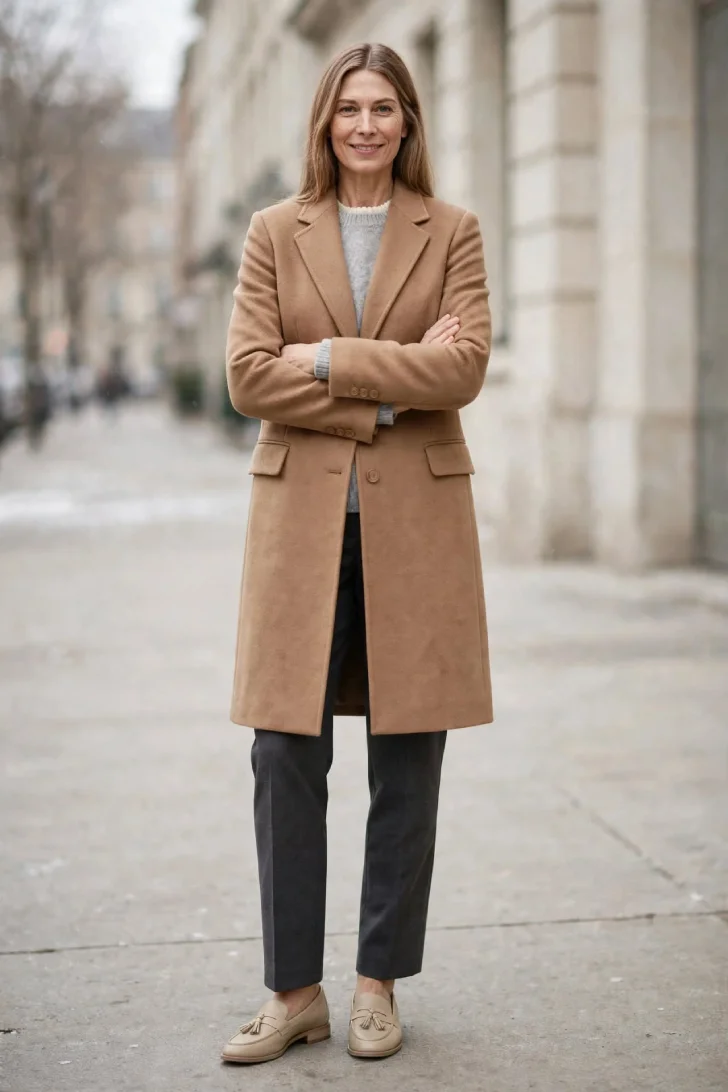
The usual advice is to buy a coat one size up so it fits over your sweaters. It often backfires, because an oversized coat adds its own width on top of everything underneath.
Try coats on while wearing your bulkiest outfit. Bring that sweater to the store if you have to.
Run through the checklist below before you buy, and keep the coat that passes most of it.
The try on test
9. Finish With a Scarf, Belt, or Boots That Break Up the Stack

An outfit tends to look finished when something at the edges does a little work. Layers can feel like one block of fabric until the neck, waist, or feet say otherwise.
Pick one finishing piece:
- ▸A light wool scarf looped once, not wrapped three times
- ▸A slim belt over the longest layer to mark your waist
- ▸Boots that meet your pant hem so the leg line stays long
One is enough. Two starts to compete.
Thin layers, one texture, staggered hems, and one finishing piece. That is the whole formula.
Conclusion
Layering well over 40 comes down to a few quiet choices. Keep the pieces thin, pick one texture, let the hems fall at different points, and finish with something at your neck, waist, or feet. None of it needs a new wardrobe, only a little more attention in the mirror before you leave.
Keep these winter layering outfits over 40 as a quick checklist for cold mornings and try one move at a time. Swapping a thick base for a thin one, or shifting a single hem, can change how the whole outfit sits.
Save this list to your winter style board so it is ready the next time you stand at the closet wondering what to take off.